iOS底层探索 - runtime与消息发送
前言 探索完对象的创建与销毁,下面我们来看一下Objective-C一个特性,那就是runtime,中文翻译叫做运行时。是指Objective-C编译后的代码不是直接运行的,而是在一个运行时的系统中动态调用的。正是因为这个特性,使得我们可以做到很多有意思的事情。
前言
探索完对象的创建与销毁,下面我们来看一下Objective-C一个特性,那就是runtime,中文翻译叫做运行时。是指Objective-C编译后的代码不是直接运行的,而是在一个运行时的系统中动态调用的。正是因为这个特性,使得我们可以做到很多有意思的事情。
runtime
按照官方定义,运行时系统更像是一个操作系统,而Objective-C语言就像是运行在其中的程序。运行时有两个版本,本文中讨论的是“modern”版本,即Objective-C 2.0使用的版本,它较于Objective-C 1.0使用的“legacy”版本增加了一些新的特性,详细的可以看官方文档的描述。
消息发送
runtime最重要的功能就是消息发送即方法调用,在Objective-C中,我们调用一个方法一般是这样实现的:
[receiver message]然后编译器在编译的过程中会把上面的代码转换成:
objc_msgSend(receiver, selector)而objc_msgSend方法完成了动态发送消息的功能,下面我们就来看下objc_msgSend中都做了什么。
在缓存中查找
在runtime源码中找到了objc_msgSend的定义,但是可惜的是没有看到具体的实现。后面上网查了下,发现为了性能考虑,objc_msgSend的源码使用汇编实现的,然后在源码的汇编文件中发现了objc_msgSend的实现。
篇幅原因这里就不贴源码了,感兴趣的可以自己阅读。这里就用伪代码来描述一下大体实现:
id objc_msgSend(id self, SEL _cmd, ...) {
    if (self == nil) return;                        \\判空保护
    if(CacheHit == CacheLookup) {
        return call imp;                            \\如果查询缓存命中,则直接调用imp
    } else {
        return __class_lookupMethodAndLoadCache3;   \\如果没有命中,则继续查询
    }
}
我们可以看到objc_msgSend汇编代码中主要做的就是查询缓存。因为动态消息发送,消息查询发送的逻辑还是比较耗时的,如果每次发送都要查询一次,系统开销比较大。所以每个类中都会有一个方法缓存列表,缓存调用过的方法IMP。当再次有相同的方法调用过来的时候,会先查询缓存,如果缓存命中则直接调用对应的IMP即可。这样的话,调用的效率就和静态编译的差不多了。
在类中查找
如果缓存中没有命中,那么就会调用__class_lookupMethodAndLoadCache3,这个方法就不是汇编实现的了:
/***********************************************************************
* _class_lookupMethodAndLoadCache.
* Method lookup for dispatchers ONLY. OTHER CODE SHOULD USE lookUpImp().
* This lookup avoids optimistic cache scan because the dispatcher
* already tried that.
**********************************************************************/
IMP _class_lookupMethodAndLoadCache3(id obj, SEL sel, Class cls)
{
    return lookUpImpOrForward(cls, sel, obj,
                              YES/*initialize*/, NO/*cache*/, YES/*resolver*/);
}
这里面只是简单的调用了lookUpImpOrForward,参数传入中需要注意initialize为YES,说明如果调用的类是第一次调用,那么需要先调用+initialize方法;cache为NO,说明不需要再查缓存了,因为之前已经查过了;resolver为YES,说明如果当类中找不到方法的时候,调用一次_class_resolveMethod,进行动态方法解析。下面看下lookUpImpOrForward的具体实现:
IMP lookUpImpOrForward(Class cls, SEL sel, id inst,
                       bool initialize, bool cache, bool resolver)
{
    IMP imp = nil;
    bool triedResolver = NO;

    runtimeLock.assertUnlocked();

    // Optimistic cache lookup
    if (cache) {
        imp = cache_getImp(cls, sel);
        if (imp) return imp;
    }

    // runtimeLock is held during isRealized and isInitialized checking
    // to prevent races against concurrent realization.

    // runtimeLock is held during method search to make
    // method-lookup + cache-fill atomic with respect to method addition.
    // Otherwise, a category could be added but ignored indefinitely because
    // the cache was re-filled with the old value after the cache flush on
    // behalf of the category.

    runtimeLock.read();

    if (!cls->isRealized()) {
        // Drop the read-lock and acquire the write-lock.
        // realizeClass() checks isRealized() again to prevent
        // a race while the lock is down.
        runtimeLock.unlockRead();
        runtimeLock.write();

        realizeClass(cls);

        runtimeLock.unlockWrite();
        runtimeLock.read();
    }

    if (initialize  &&  !cls->isInitialized()) {
        runtimeLock.unlockRead();
        _class_initialize (_class_getNonMetaClass(cls, inst));
        runtimeLock.read();
        // If sel == initialize, _class_initialize will send +initialize and
        // then the messenger will send +initialize again after this
        // procedure finishes. Of course, if this is not being called
        // from the messenger then it won't happen. 2778172
    }


 retry:
    runtimeLock.assertReading();

    // Try this class's cache.

    imp = cache_getImp(cls, sel);
    if (imp) goto done;

    // Try this class's method lists.
    {
        Method meth = getMethodNoSuper_nolock(cls, sel);
        if (meth) {
            log_and_fill_cache(cls, meth->imp, sel, inst, cls);
            imp = meth->imp;
            goto done;
        }
    }

    // Try superclass caches and method lists.
    {
        unsigned attempts = unreasonableClassCount();
        for (Class curClass = cls->superclass;
             curClass != nil;
             curClass = curClass->superclass)
        {
            // Halt if there is a cycle in the superclass chain.
            if (--attempts == 0) {
                _objc_fatal("Memory corruption in class list.");
            }

            // Superclass cache.
            imp = cache_getImp(curClass, sel);
            if (imp) {
                if (imp != (IMP)_objc_msgForward_impcache) {
                    // Found the method in a superclass. Cache it in this class.
                    log_and_fill_cache(cls, imp, sel, inst, curClass);
                    goto done;
                }
                else {
                    // Found a forward:: entry in a superclass.
                    // Stop searching, but don't cache yet; call method
                    // resolver for this class first.
                    break;
                }
            }

            // Superclass method list.
            Method meth = getMethodNoSuper_nolock(curClass, sel);
            if (meth) {
                log_and_fill_cache(cls, meth->imp, sel, inst, curClass);
                imp = meth->imp;
                goto done;
            }
        }
    }

    // No implementation found. Try method resolver once.

    if (resolver  &&  !triedResolver) {
        runtimeLock.unlockRead();
        _class_resolveMethod(cls, sel, inst);
        runtimeLock.read();
        // Don't cache the result; we don't hold the lock so it may have
        // changed already. Re-do the search from scratch instead.
        triedResolver = YES;
        goto retry;
    }

    // No implementation found, and method resolver didn't help.
    // Use forwarding.

    imp = (IMP)_objc_msgForward_impcache;
    cache_fill(cls, sel, imp, inst);

 done:
    runtimeLock.unlockRead();

    return imp;
}
这里面的逻辑比较多,所以这里梳理一下:
- 判断
cache是否为true,如果为true,则查找一次缓存 - 如果
class还没有初始化,那么先初始化一下 - 如果
class是第一次调用且initialize为true,则调用一下class的+initialize方法 - 搜索当前类的缓存列表,如果有
imp则直接返回 - 搜索当前类的方法列表,如果有
imp则直接返回 - 循环遍历类的
superclass,依次查询superclass的缓存列表和方法列表,如果有imp则直接返回 - 如果
resolver为true,则调用一次_class_resolveMethod方法,然后跳转到第4步执行 - 如果还没有找到
imp,那么将imp赋值为_objc_msgForward_impcache并缓存 - 返回
imp
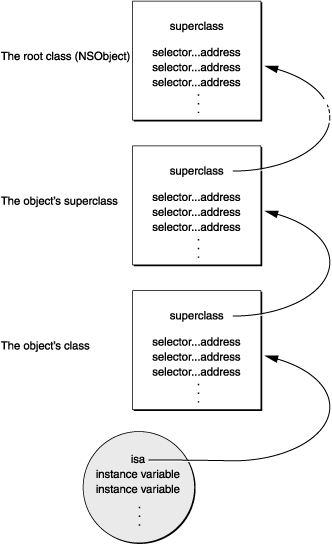
逻辑理清之后,这里要解释一下方法查询的逻辑,为什么要找superclass?
每个实例中都有一个isa指针,isa指针指向的是类实例,在Objective-C中每个类都是一个单例对象,这个类中保存的是类的所有实例方法。类的isa指向的是类的元类(metaClass),其中元类保存的是类的所有类方法,而类的superclass指向的是父类实例。
原文图片托管服务已失效,图片暂未迁移。
所以在搜索方法的时候,是顺着superclass指针来查找实例或者类方法的。
动态方法解析
前面说到,如果方法查找没有找到imp,那么就会调用_class_resolveMethod方法,也就是动态方法解析的逻辑,下面看下具体是怎么实现的。
void _class_resolveMethod(Class cls, SEL sel, id inst)
{
    if (! cls->isMetaClass()) {
        // try [cls resolveInstanceMethod:sel]
        _class_resolveInstanceMethod(cls, sel, inst);
    }
    else {
        // try [nonMetaClass resolveClassMethod:sel]
        // and [cls resolveInstanceMethod:sel]
        _class_resolveClassMethod(cls, sel, inst);
        if (!lookUpImpOrNil(cls, sel, inst,
                            NO/*initialize*/, YES/*cache*/, NO/*resolver*/))
        {
            _class_resolveInstanceMethod(cls, sel, inst);
        }
    }
}这个逻辑就比较简单了,如果当前的class不是metaClass,那么就调用[cls resolveInstanceMethod:sel];如果是metaClass,那么就先调用[nonMetaClass resolveClassMethod:sel],然后再查询父类方法中是否有相同sel名字的方法,如果没有,再调用一次[cls resolveInstanceMethod:sel]。
可以发现调用类方法的时候,会再次兜底调用一次resolveInstanceMethod方法,也就是说如果调用一个不存在的类方法的时候,最终会调用一次NSObject的resolveInstanceMethod方法(这是因为resolveInstanceMethod调用的是当前对象的isa类中方法,而metaClass的isa一般都是NSObject)。所以在NSObject的resolveInstanceMethod中还会有一次补救机会。
消息转发
当动态解析也没有找到IMP的时候,就会返回一个_objc_msgForward_impcache的IMP,这个IMP只是在方法缓存列表中存储的一个指针,指向了_objc_msgForward或者_objc_msgForward_stret。
这之后的实现逻辑如下:
- 先调用
forwardingTargetForSelector方法获取新的target作为receiver重新执行selector,如果返回的内容不合法(为 nil 或者跟旧 receiver 一样),那就进入第二步。 - 调用
methodSignatureForSelector获取方法签名后,判断返回类型信息是否正确,再调用forwardInvocation执行NSInvocatio对象,并将结果返回。如果对象没实现methodSignatureForSelector方法,进入第三步。 - 调用
doesNotRecognizeSelector方法。
具体是如何实现的,需要用到逆向工程的技术,这里就不详细展开了,推荐阅读下面的文章来了解一下。 Objective-C 消息发送与转发机制原理 Hmmm, What’s that Selector?
forwardingTargetForSelector
forwardingTargetForSelector的类方法和实例方法在NSObject中的默认实现都是直接返回nil,所以需要开发者自己来实现。这里简单给一个例子:
+ (id)forwardingTargetForSelector:(SEL)sel {
    if(sel == @selector(xxx)) {
        return NSClassFromString(@"Class name");
    }
    return [super forwardingTargetForSelector:sel];
}

- (id)forwardingTargetForSelector:(SEL)sel
{
    if(aSelector == @selector(xxx)){
        return otherObject;
    }
    return [super forwardingTargetForSelector:sel];
}
methodSignatureForSelector && forwardInvocation
如果forwardingTargetForSelector返回了nil,那么就会调用methodSignatureForSelector,如果返回不为空,则会继续调用forwardInvocation方法。这里同样是需要开发者自己来实现:
- (NSMethodSignature*)methodSignatureForSelector:(SEL)aSelector
{
    if (aSelector == @selector(xxx)) {
        return [NSMethodSignature signatureWithObjCTypes:"v@:"];
    }

    return [super methodSignatureForSelector:aSelector];
}

- (void)forwardInvocation:(NSInvocation *)anInvocation {
    SEL sel = anInvocation.selector;

    otherObject *o = [otherObject new];
    if([o respondsToSelector:sel]) {
        [anInvocation invokeWithTarget:o];
    }
    else {
        [self doesNotRecognizeSelector:sel];
    }

}
应用举例
到这里整个runtime的消息发送的流程就已经走完了,那么了解runtime之后有什么用呢?下面就举几个比较常见的应用:
为Category中的property实现setter和getter
在正常情况下,Category中添加property后,系统是不会生成setter和getter方法的。但是有了runtime,我们就可以动态的为property添加setter和getter方法。
这里我为自己创建的一个Fruit类的Category中添加一个name属性:
@interface Fruit (Name)

@property (nonatomic, copy) NSString *name;

@end

@implementation Fruit (Name)

static const void *Name = &Name;
@dynamic name;

- (void)setName:(NSString *)name {
    objc_setAssociatedObject(self, &Name, name, OBJC_ASSOCIATION_RETAIN_NONATOMIC);
}

- (NSString *)name {
    return objc_getAssociatedObject(self, &Name);
}

@end

- (void)viewDidLoad {
    [super viewDidLoad];

    Fruit *fruit = [Fruit new];
    fruit.name = @"apple";
    NSLog(@"%@", fruit.name);
}
KVO
KVO全称Key-Value Observering,提供了一种属性key被修改的时候能够收到通知的机制。这是使用了isa-swizzling方法来实现的,当观察对象A时,系统会动态创建一个A的子类名为NSKVONofitying_A,并在这个类中重写了你要观察的属性的setter方法。
然后在setter方法中,属性赋值之前调用了willChangeValueForKey:,赋值之后调用了didChangeValueForKey:。这样观察者就能够收到修改通知,这些操作都是在运行时实现的。
- (void)setObject:(NSString *)newObject {
      [self willChangeValueForKey:@"object"];
      _object = newObject;
      [self didChangeValueForKey:@"object"];
}
JSPatch
JSPatch 是一个 iOS 动态更新框架,只需在项目中引入极小的引擎,就可以使用 JavaScript 调用任何 Objective-C 原生接口,获得脚本语言的优势:为项目动态添加模块,或替换项目原生代码动态修复 bug。
JSPatch底层实现的原理就是使用了消息转发的机制,将要替换的方法通过class_replaceMethod()指向_objc_msgForward,这样就会走到forwardInvocation:,然后在forwardInvocation:中替换成新的方法。在这个新方法里取到参数传给JS,调用JS的实现函数。
更多实现细节可以看官方的说明文档。
总结
- 方法调用最终运行的代码是在运行时决定的,而不是在代码编译阶段
- 消息发送时有使用缓存机制来加速查找
- 消息发送大致流程:缓存列表查找 -> 类方法列表查找 -> 动态方法解析 -> 消息转发
- 消息发送过程中有多次补救的机会,灵活使用可以做很多事情
参考
- https://github.com/RetVal/objc-runtime/blob/942d274d24f06ace04022100b01f17aee0766fdc/runtime/Messengers.subproj/objc-msg-arm64.s
- https://github.com/Draveness/analyze/blob/master/contents/objc/%E4%BB%8E%E6%BA%90%E4%BB%A3%E7%A0%81%E7%9C%8B%20ObjC%20%E4%B8%AD%E6%B6%88%E6%81%AF%E7%9A%84%E5%8F%91%E9%80%81.md
- https://developer.apple.com/library/content/documentation/Cocoa/Conceptual/ObjCRuntimeGuide/Introduction/Introduction.html
- https://juejin.im/post/5ac0a6116fb9a028de44d717
- https://www.jianshu.com/p/92d3fe62014d
- https://blog.ibireme.com/2013/11/26/objective-c-messaging/
- http://yulingtianxia.com/blog/2016/06/15/Objective-C-Message-Sending-and-Forwarding/